
the Game
The trade desk got smarter
Every AI front office in HoopSim now trades more like a real one: it knows whether it is really contending, prices prospects on what they are becoming, counts money and health, and negotiates with room to talk. Examples inside.
Every AI front office in HoopSim got a new brain for trades today. Nothing about the games changed. What changed is how the clubs run by the CPU decide what a player is worth to them, and how they talk a deal through with you.
The goal is simple. When you sit across from an AI general manager, it should feel like dealing with a smart one: a team that knows where it stands, protects what matters to its plan, and pays fair prices for what it wants.
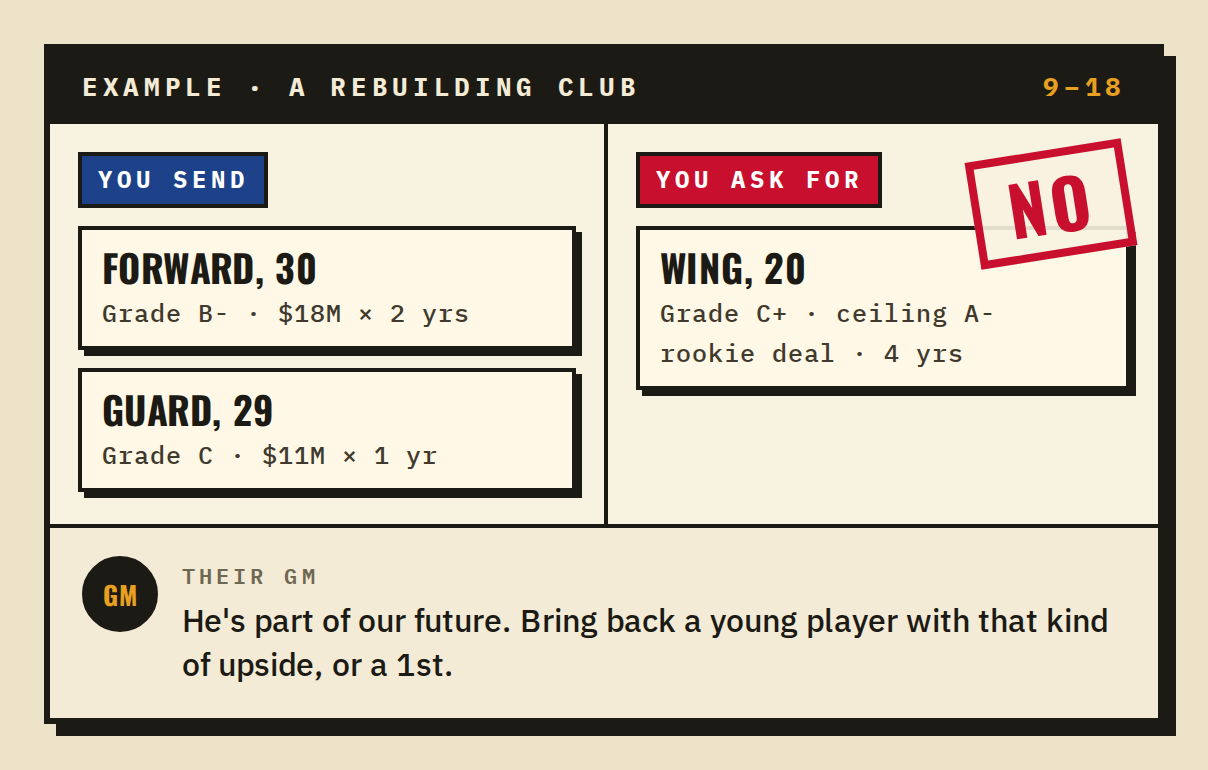
A winning record isn't a window
An AI club now decides whether it is contending from three things together: its record, how its roster's talent ranks around the league, and its point differential. A hot start on a middle-of-the-pack roster no longer turns a club into a buyer.
That one decision shapes everything after it. A contender pays for proven players and protects its picks less. A club that isn't there yet keeps its young players and wants youth or picks back.
Prospects are priced on what they are becoming
Young players are now valued partly on where they are headed, not only on where they are today. Rebuilding clubs lean on the future more, contenders lean on today more, and everyone discounts for the chance a prospect never gets there.
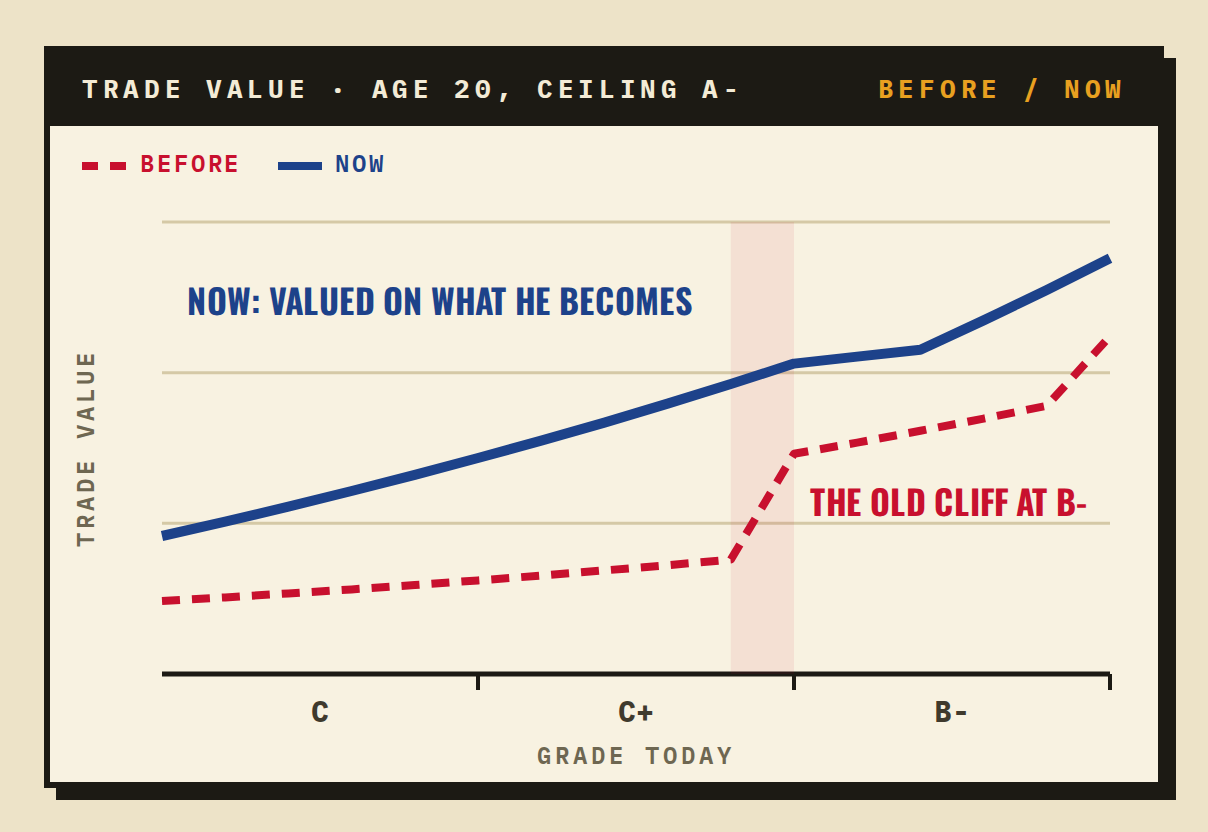
The old desk had a cliff: a 20-year-old's value nearly doubled the day his grade moved from C+ to B-. That is gone. And a top prospect on a club that isn't contending now only moves for future-shaped value: a young player with similar upside, or a 1st.
Money and health count
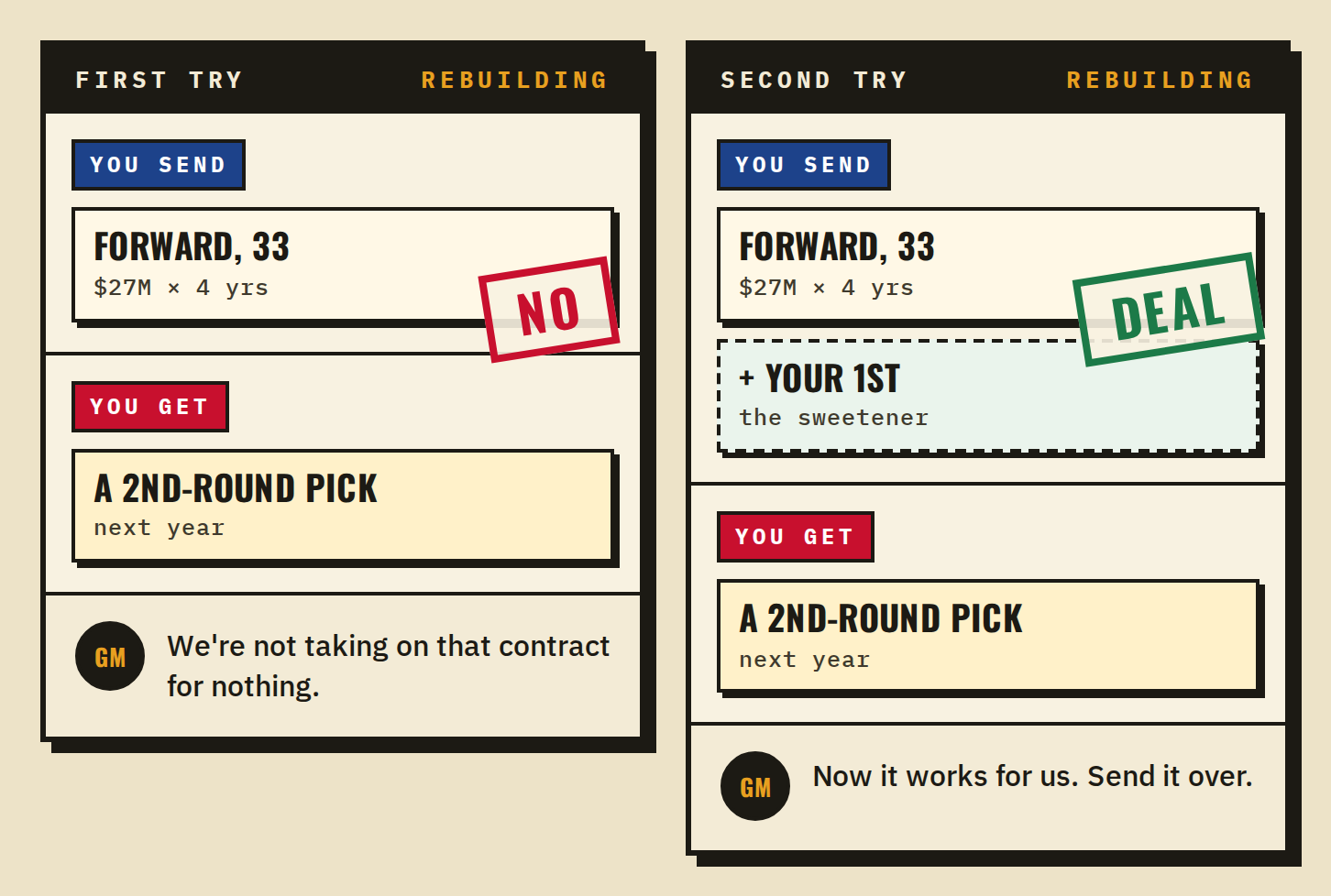
A contract is part of the player. Overpay over several seasons is now a cost the other side has to be paid to take on, and the longer it runs the bigger the cost. Rebuilding clubs and clubs near the tax feel it most.
Health counts too. An injured player is priced on how much of the season he will miss, and a contender cares about that more than a rebuilding club does.
Quality over quantity
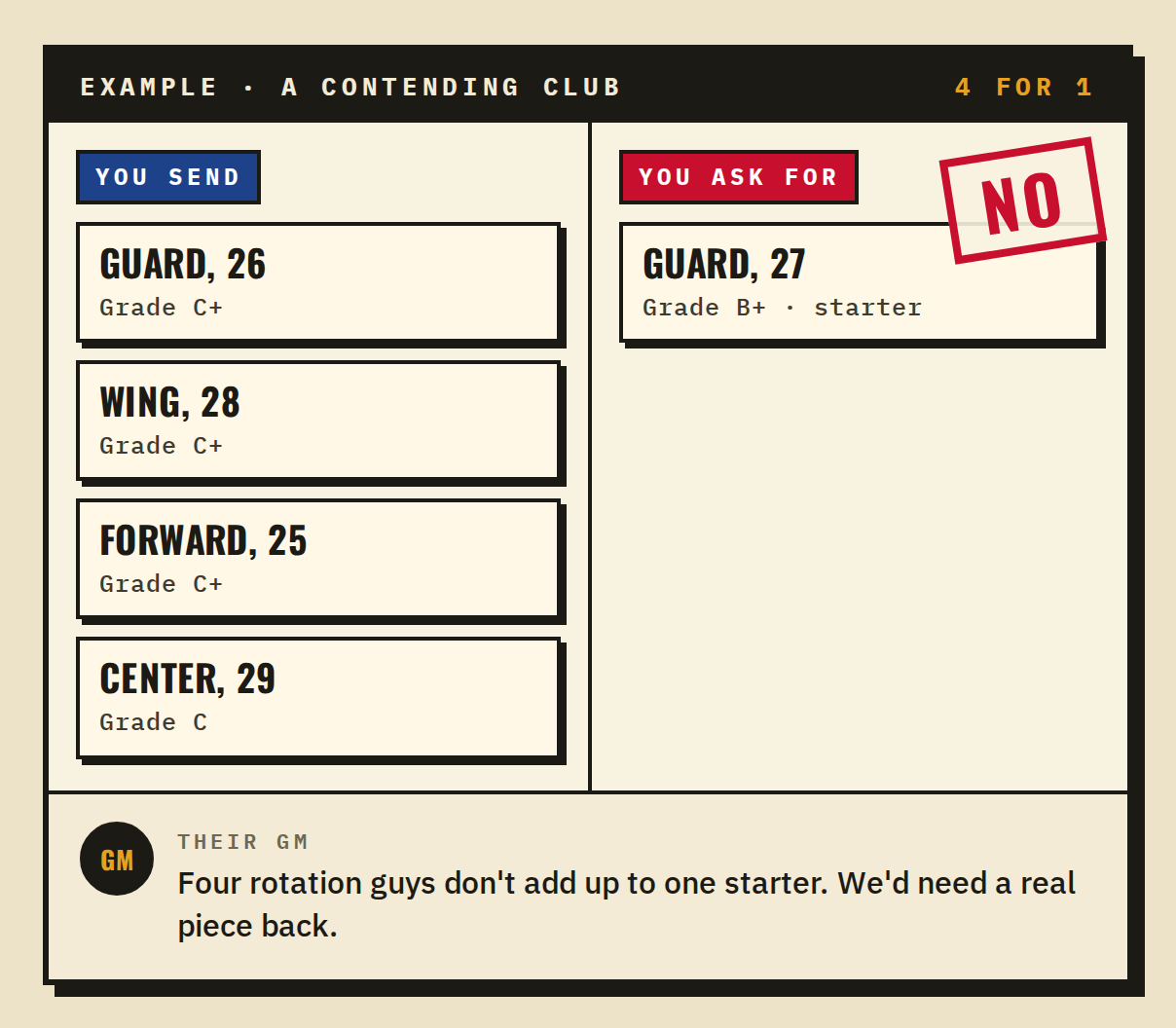
Four rotation players do not add up to one starter, the same way it works in the real league. When a club takes back more bodies than it sends, the extra lesser players count for less.
They remember
An AI club will not buy back a player it traded away in the last 30 days, and a player who has changed teams twice in two weeks gets a closer look before anyone takes him on.
Talking a deal
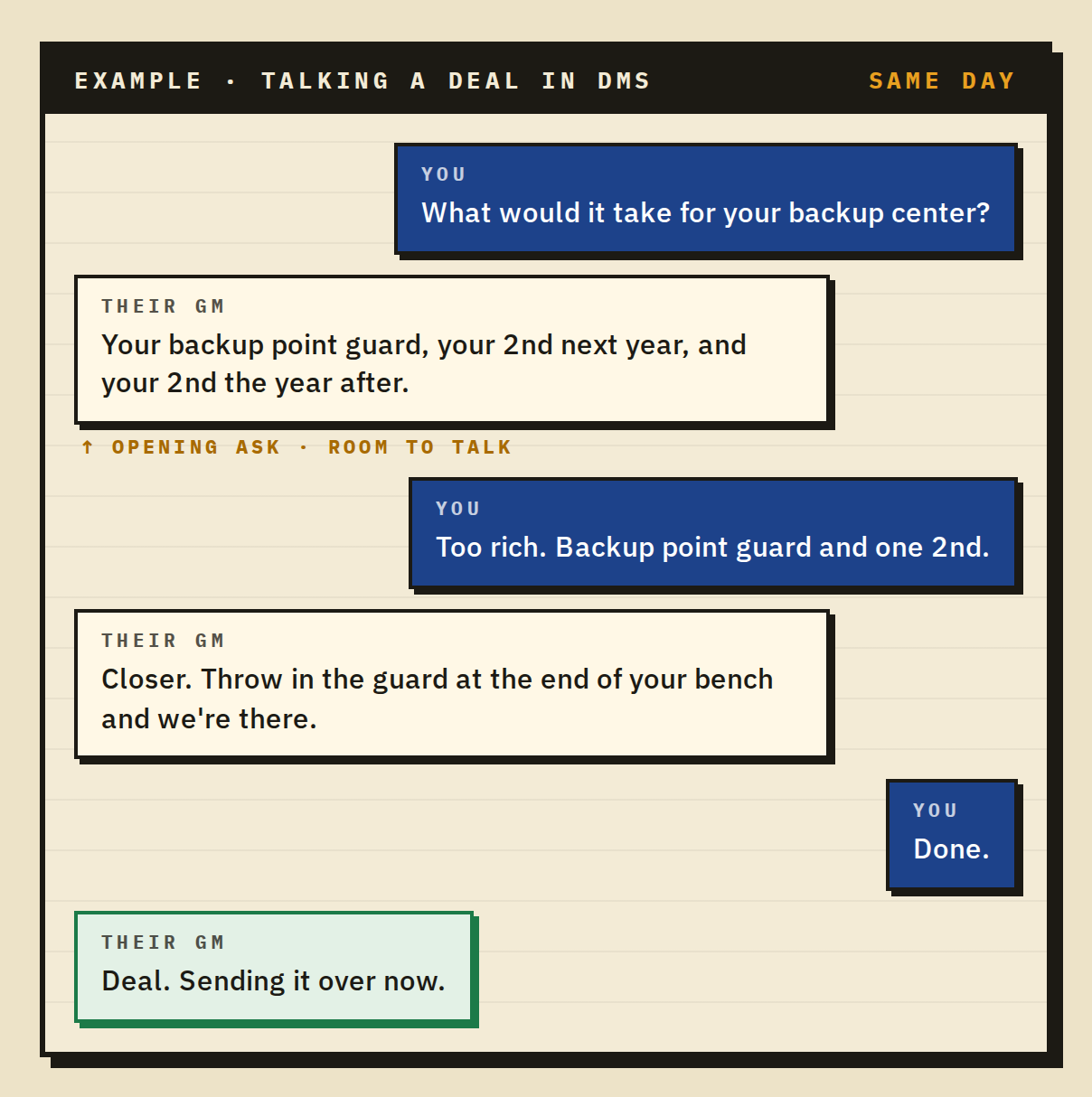
Ask an AI general manager what it would take and you get an opening ask, the same as you would from a person. It leaves room to talk, and it comes down as the conversation goes on. Your own offer can get a yes at any point, as long as it is fair to them. They will not take a deal that leaves them worse off, and the offers they send you pass the same checks as the ones they accept.
Desk hours
In leagues with other GMs, the AI clubs keep sensible hours.
- 1Three offers a dayUp to three formal trade offers to each AI club per day.
- 2A day's worth of talkPrice talk in DMs has a daily limit with each AI club. Come back tomorrow with your best offer.
- 3A new club settles inWhen a club is handed to the CPU, it takes 72 hours to settle before it trades with GMs.
- 4A clean breakAfter you leave a club, you can't trade with it for 30 days.
“Know where you stand, protect what matters, pay fair for what you take.”
Trade with them the way you would trade with a sharp general manager. I will be watching the first weeks of deals against the numbers, and tuning from there.
— Dr. Possession